ENGINEERED PROCESS EQUIPMENT · SINCE 1990
Separation systems

Cyclone Scrubbers & Coalescers

Gas cleaning systems for liquid and particulate separation.

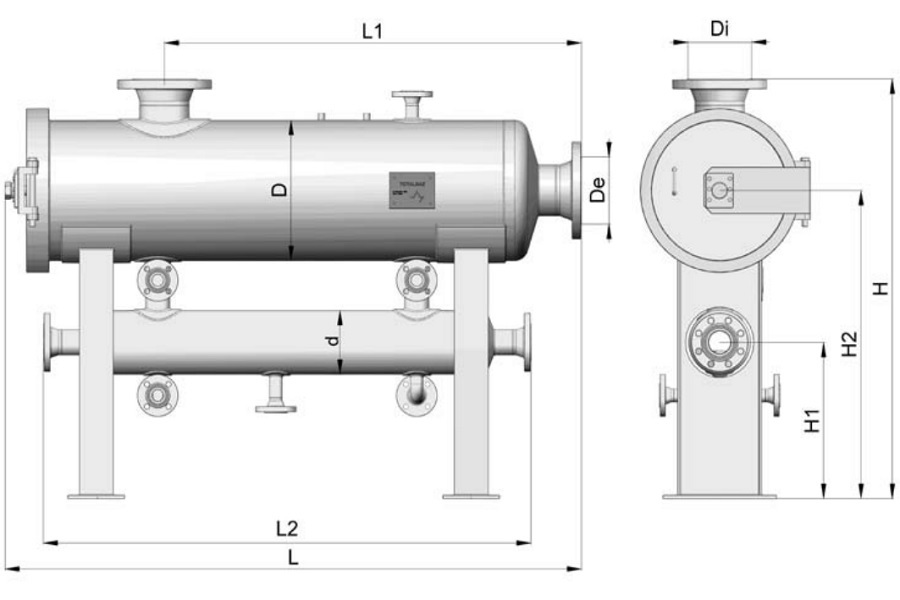
Cyclone Scrubbers & Coalescers equipment
Equipment overview

Engineered for the application.

Cyclone scrubbers and coalescers separate entrained liquids and particles from gas streams. Equipment selection combines the process duty with the gas composition, flow range, pressure, and required downstream protection.

Engineering scope

  • Cyclonic separation internals
  • Coalescing arrangements for liquid removal
  • Vessel and internal design coordinated with process requirements
  • Service-specific collection and drainage provisions

At a glance

Cyclone Scrubbers & Coalescers — equipment summary
ServiceGas stream separation
InternalsCyclonic and coalescing arrangements
Design inputsGas flow, pressure, temperature, and entrainment
ApplicationsGas treatment and process equipment protection
How it works

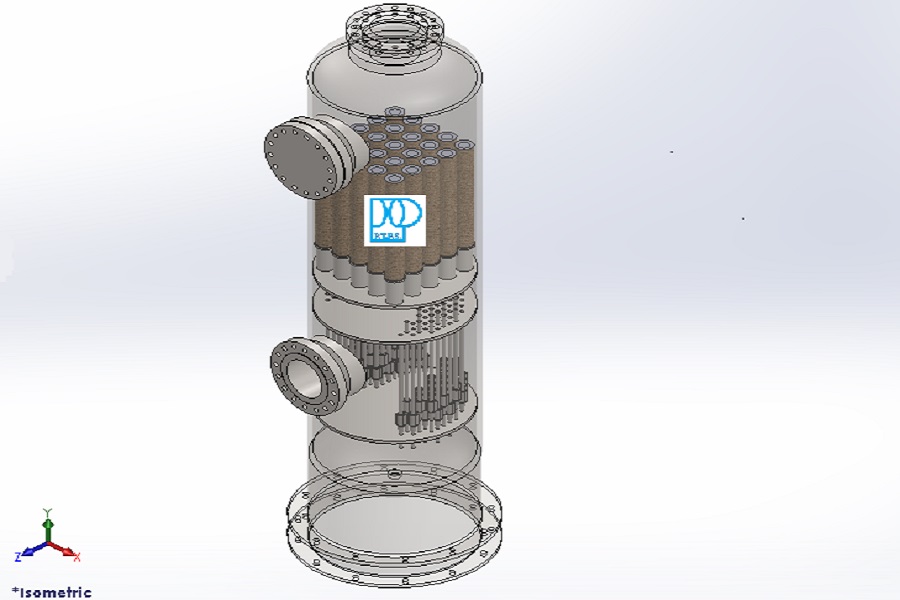
Hundreds of small cyclones on one deck.

Gas enters between two tube sheets and spins down each small cyclone. Solids and liquid are thrown to the wall and fall through the dust pipes into the hopper; clean gas turns up the outlet tubes. Change the gas flow: the swirl, the pressure drop across the deck and the cut size follow one calculation.
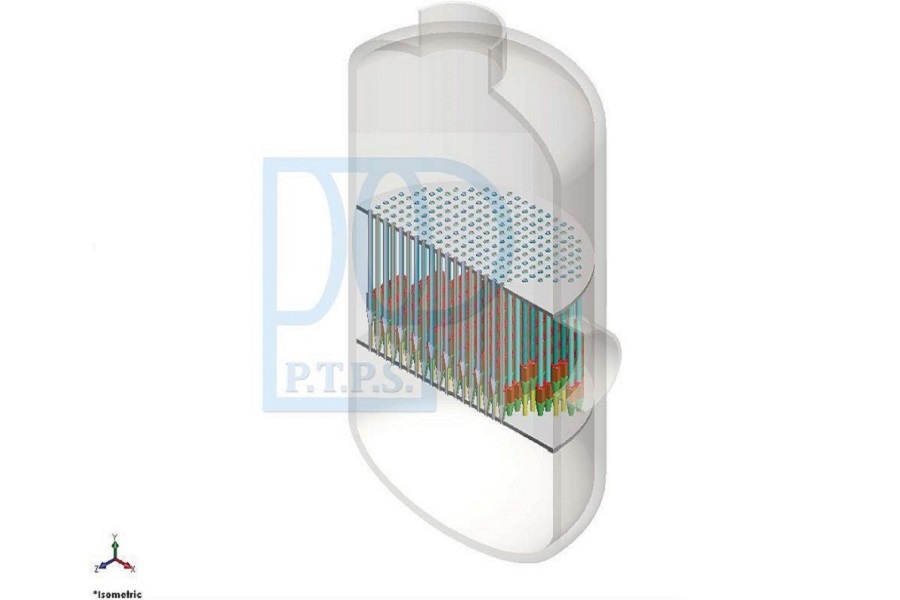
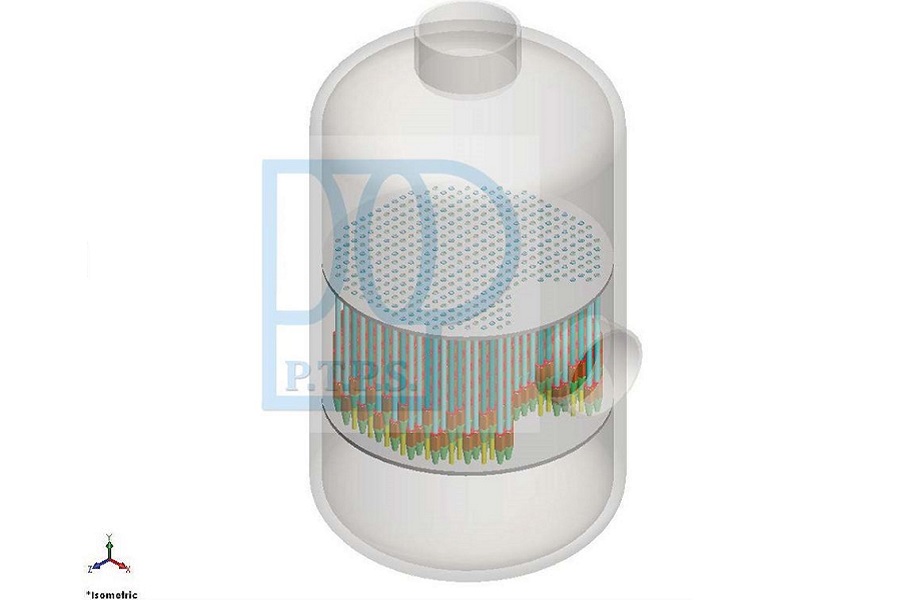
Swirl in the cyclones and the differential gauge needle: what the gas flow doesShell 1,600 mm ID, 3,200 mm T/T, 2:1 heads; 364 cyclones of 2 inIllustrative case: natural gas at 60 bar g, density 45 kg/m³, viscosity 1.3 × 10⁻⁵ Pa·s, solids of 3,000 kg/m³. Each 2 in cyclone has two tangential slots 6 × 110 mm and a 29 mm outlet tube and is rated 47.5 m³/h at operating conditions. Pressure drop is 25.1 inlet velocity heads (Shepherd and Lapple, K = 16); cut size from Lapple's model with 4.8 effective turns. The hopper fills in time-lapse at a rate taken in proportion to the gas flow. Values are illustrative; each scrubber is sized for its own duty.
From our archive

Equipment in focus.

Let’s build what’s next

Your next project starts with a conversation.

Talk to our team